Datça on Film: Sunlight, Silence and the Weight of Time
Datca Where the Aegean Meets the Mediterranean
There is a particular kind of light in Datça that feels older than memory can recall. It hangs above the Aegean like a thin silver veil—sharp, crystalline, almost philosophical in its clarity. In the summer of 2025, as I step once more onto the peninsula where the ancient Greek world once whispered its first ideas of reason and beauty, I carry with me a small but faithful companion: the Nikon FM3A. Loaded with Ilford Ortho 80, it becomes not just a camera, but a way of thinking—slow, deliberate, attuned to the heat and silence of history.
Datça in July is a world of extremes. The weather is hot enough to blur the horizon, the sun painting every stone, fig tree, and shoreline with a kind of mythic intensity. But this heat doesn’t suffocate; it reveals. It invites you to move slowly, to match your pace with that of the ancient people who once carved temples and philosophies along these same rocks. The peninsula was home to the legendary philosopher-sage Diogenes of Sinop, who once declared that “the sun, too, is a kind of truth.” Under the Datça sun, I finally understand what he meant.
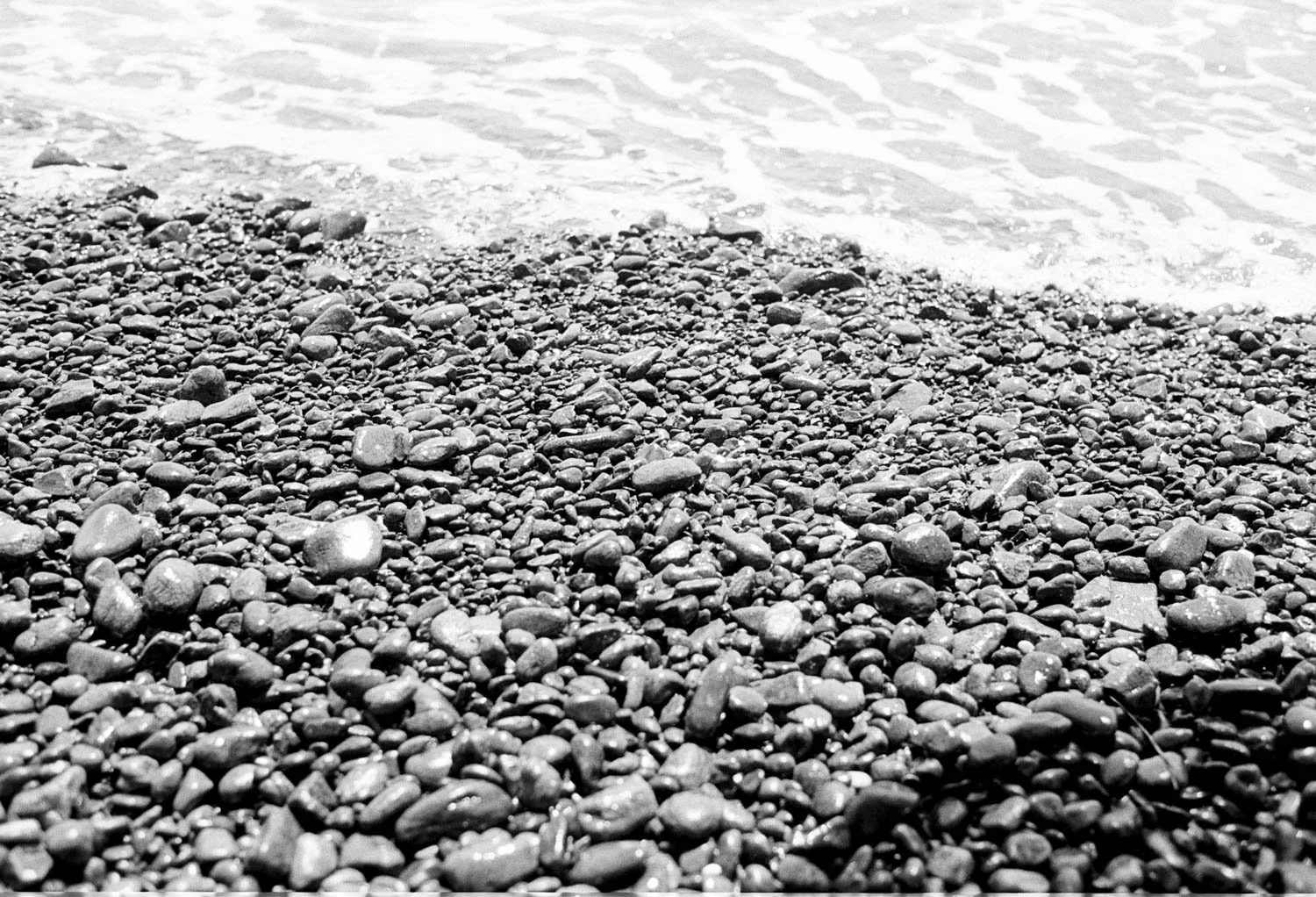
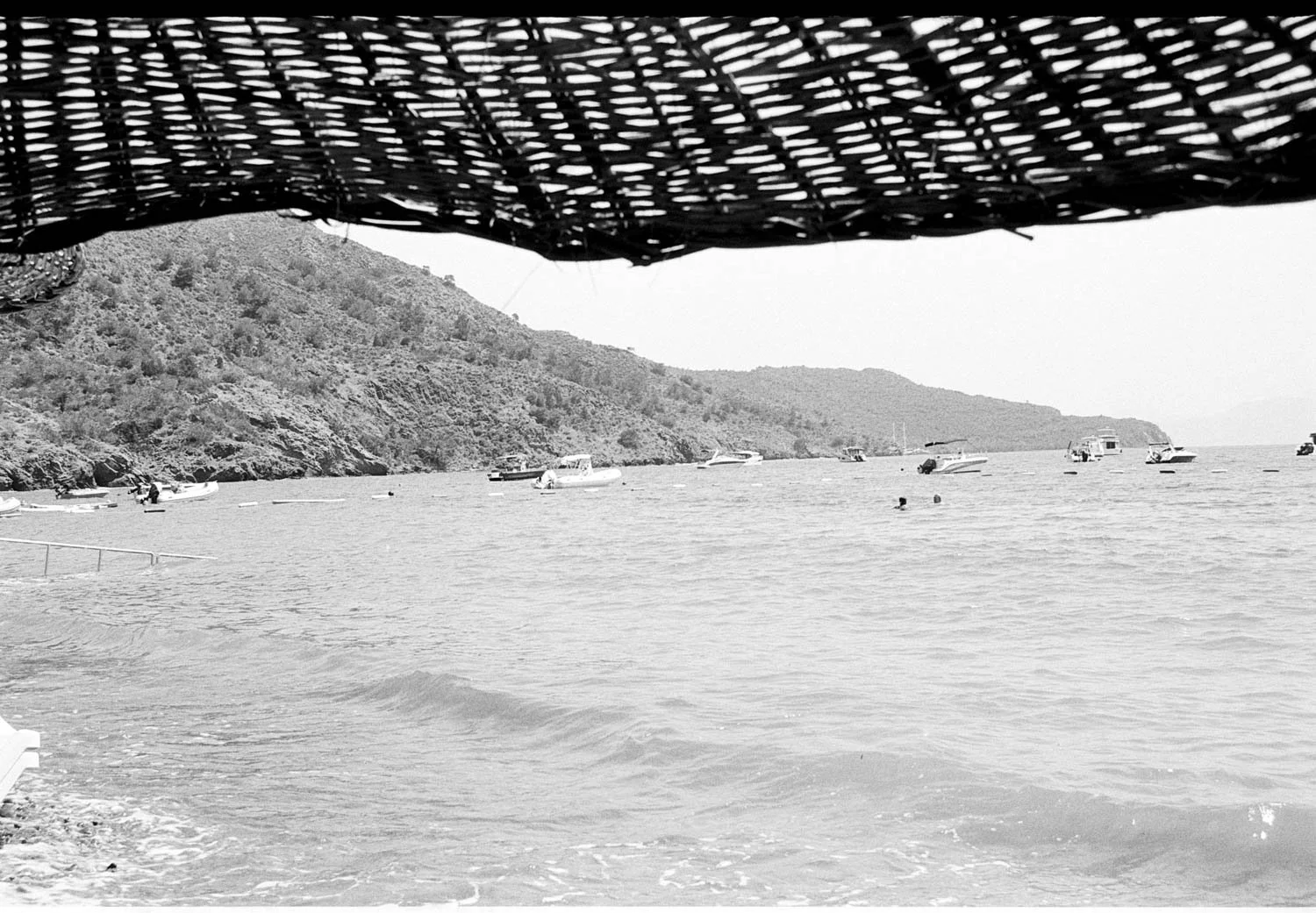
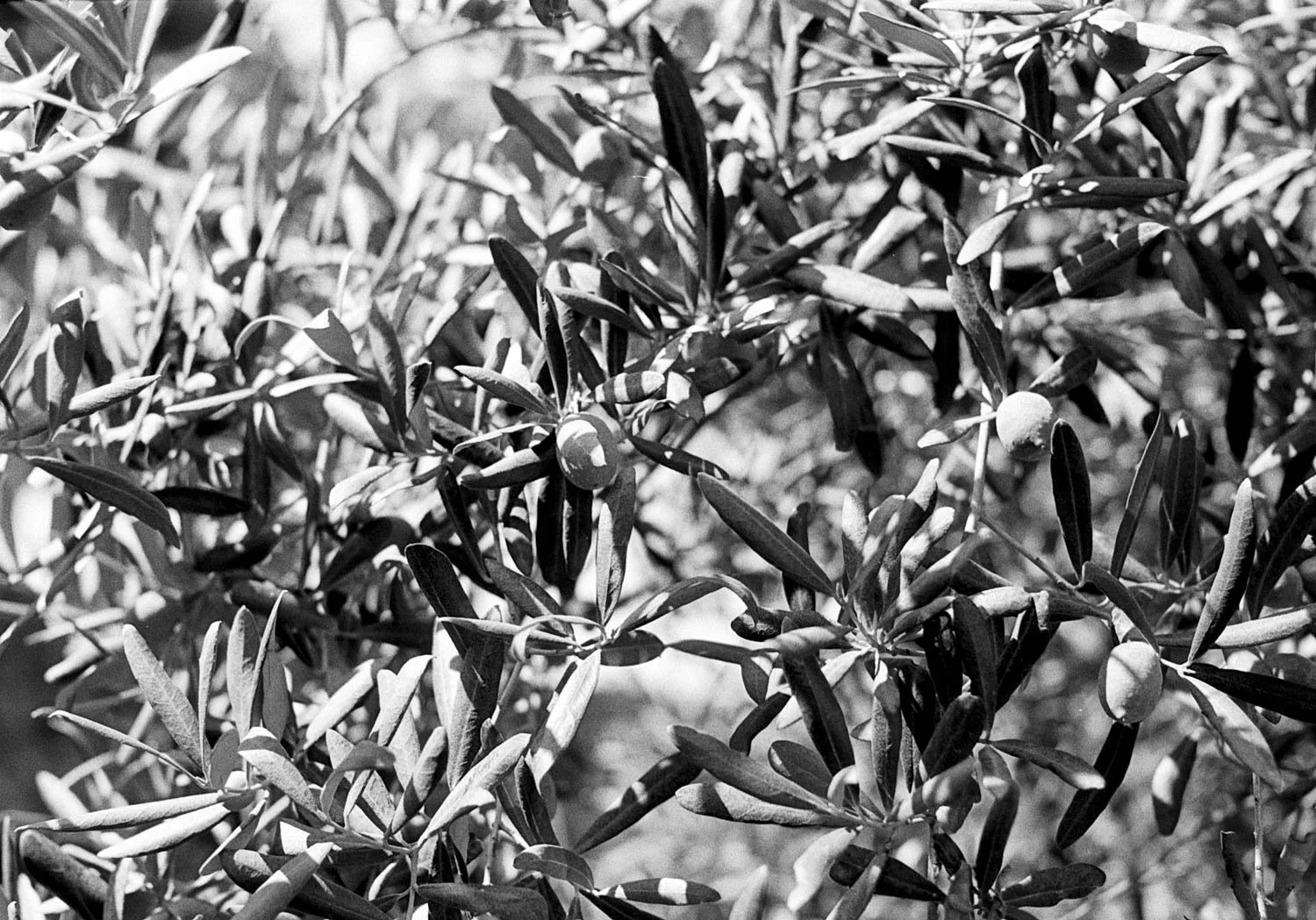
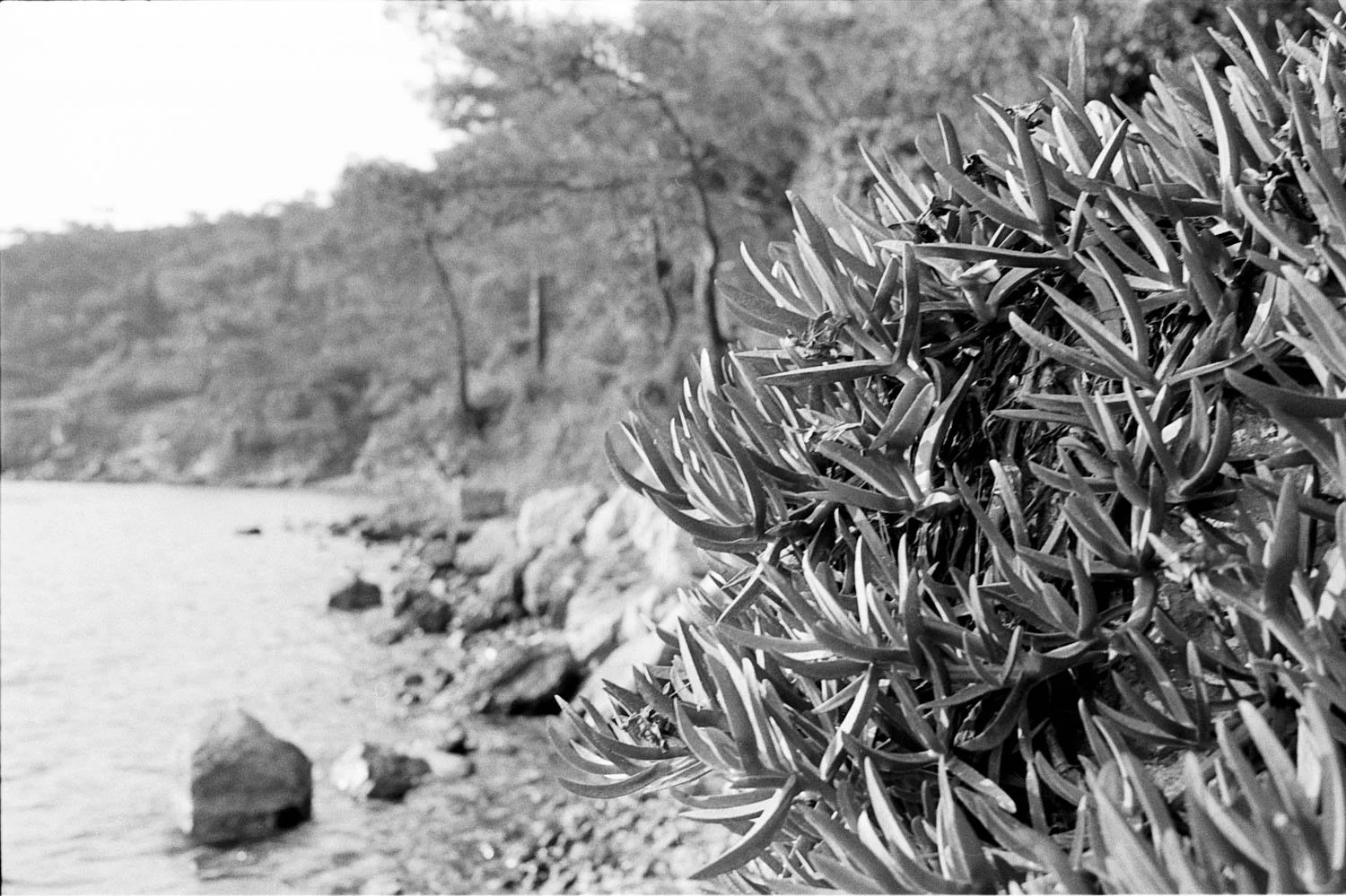
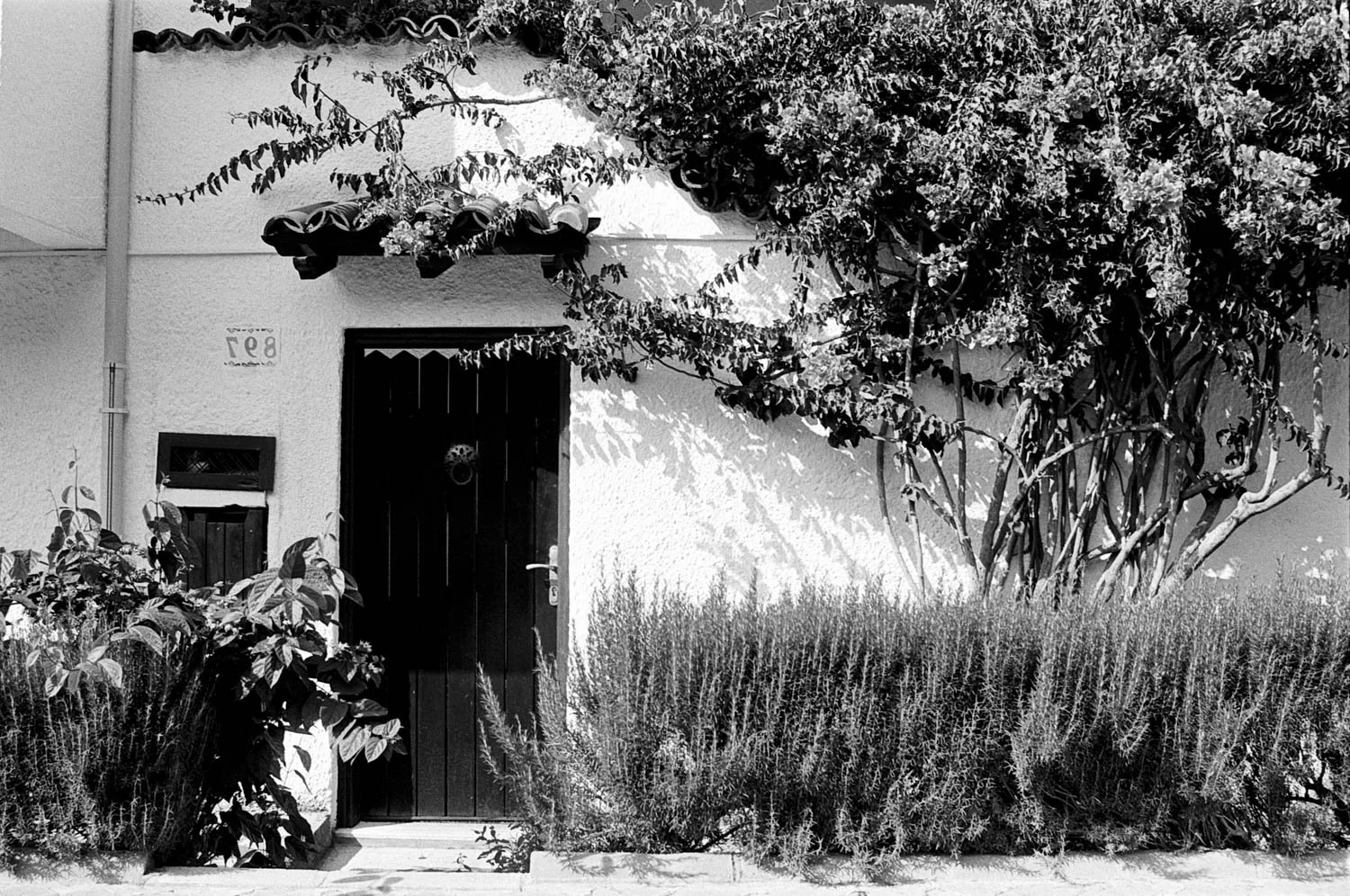
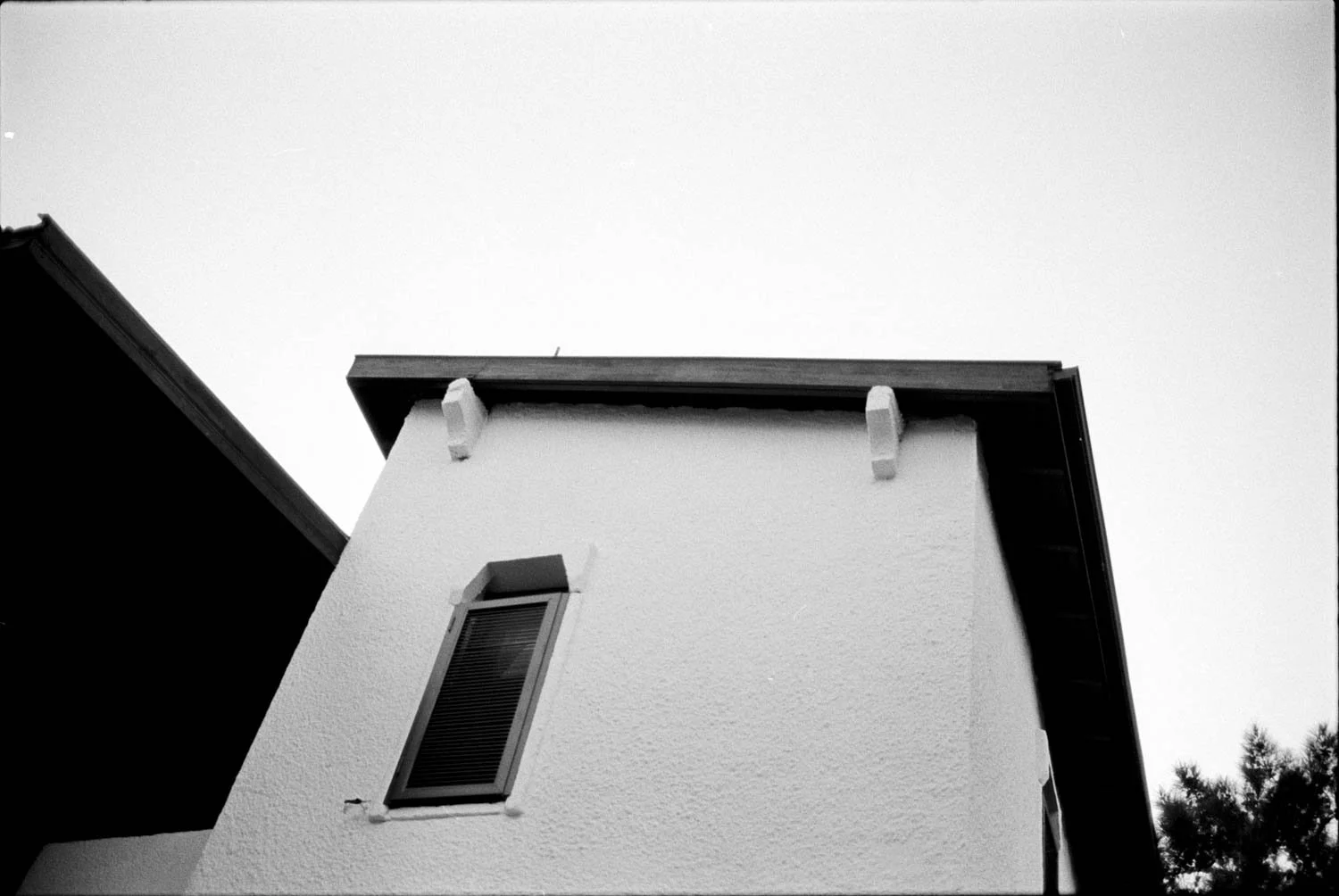
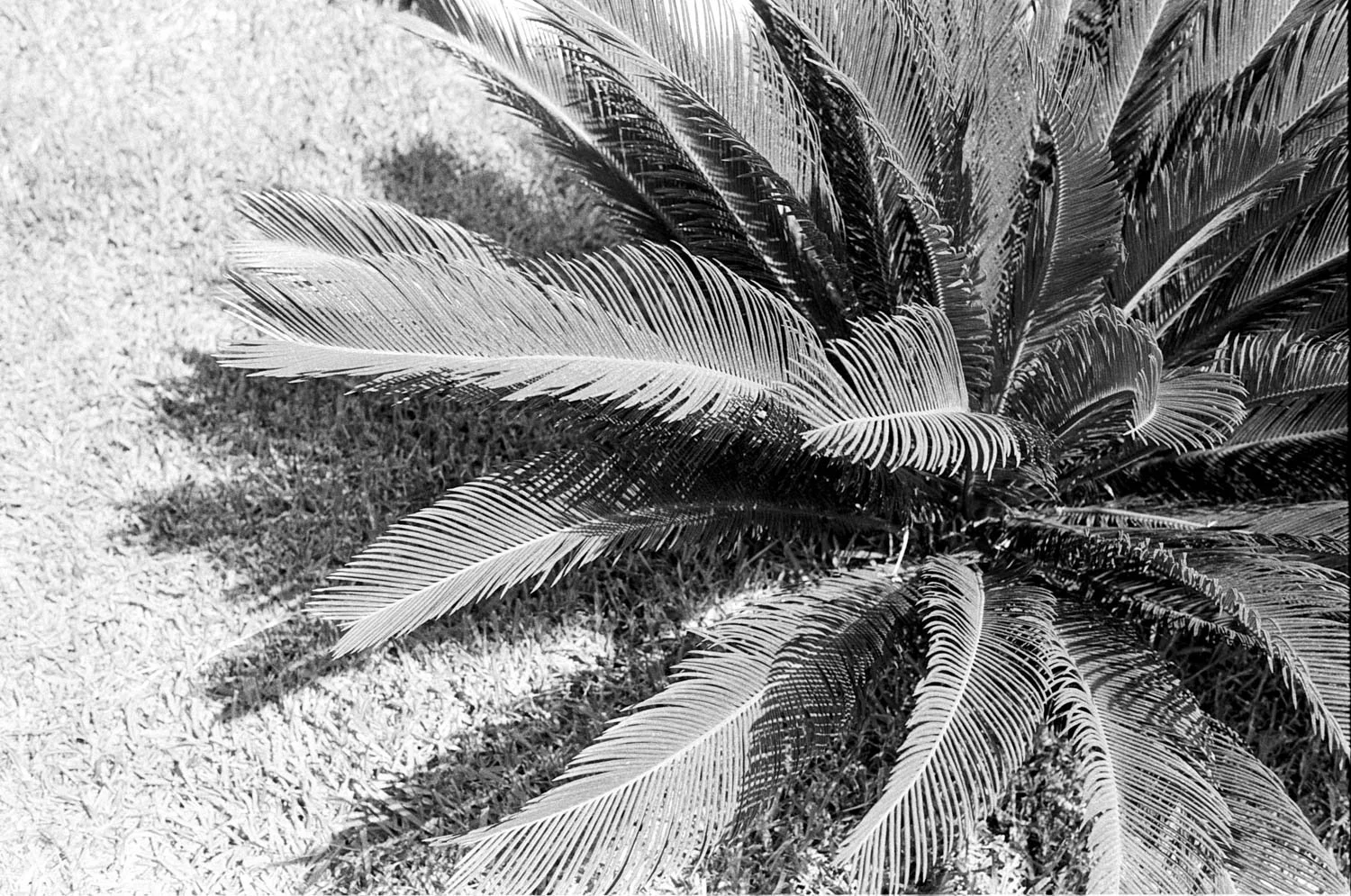
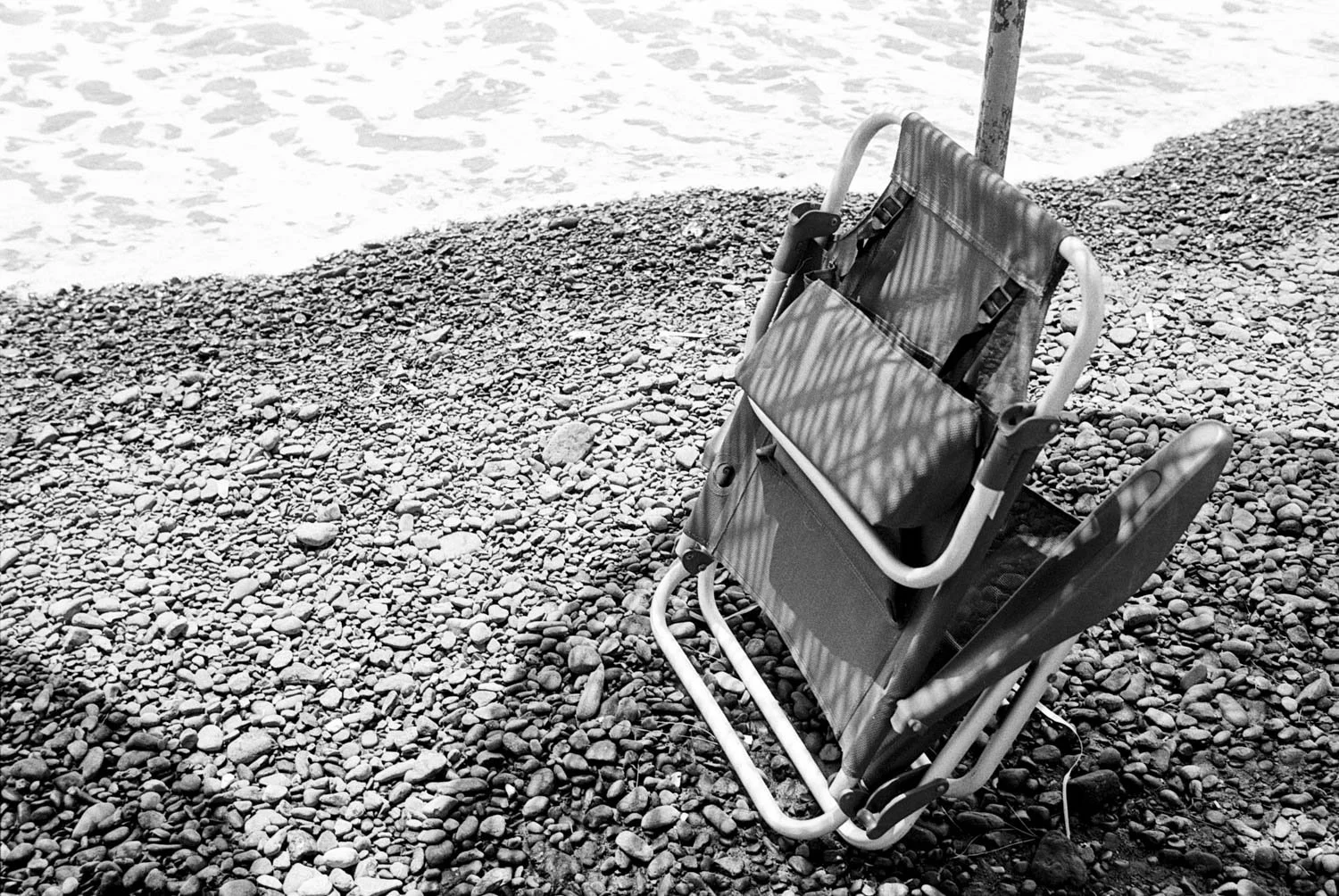
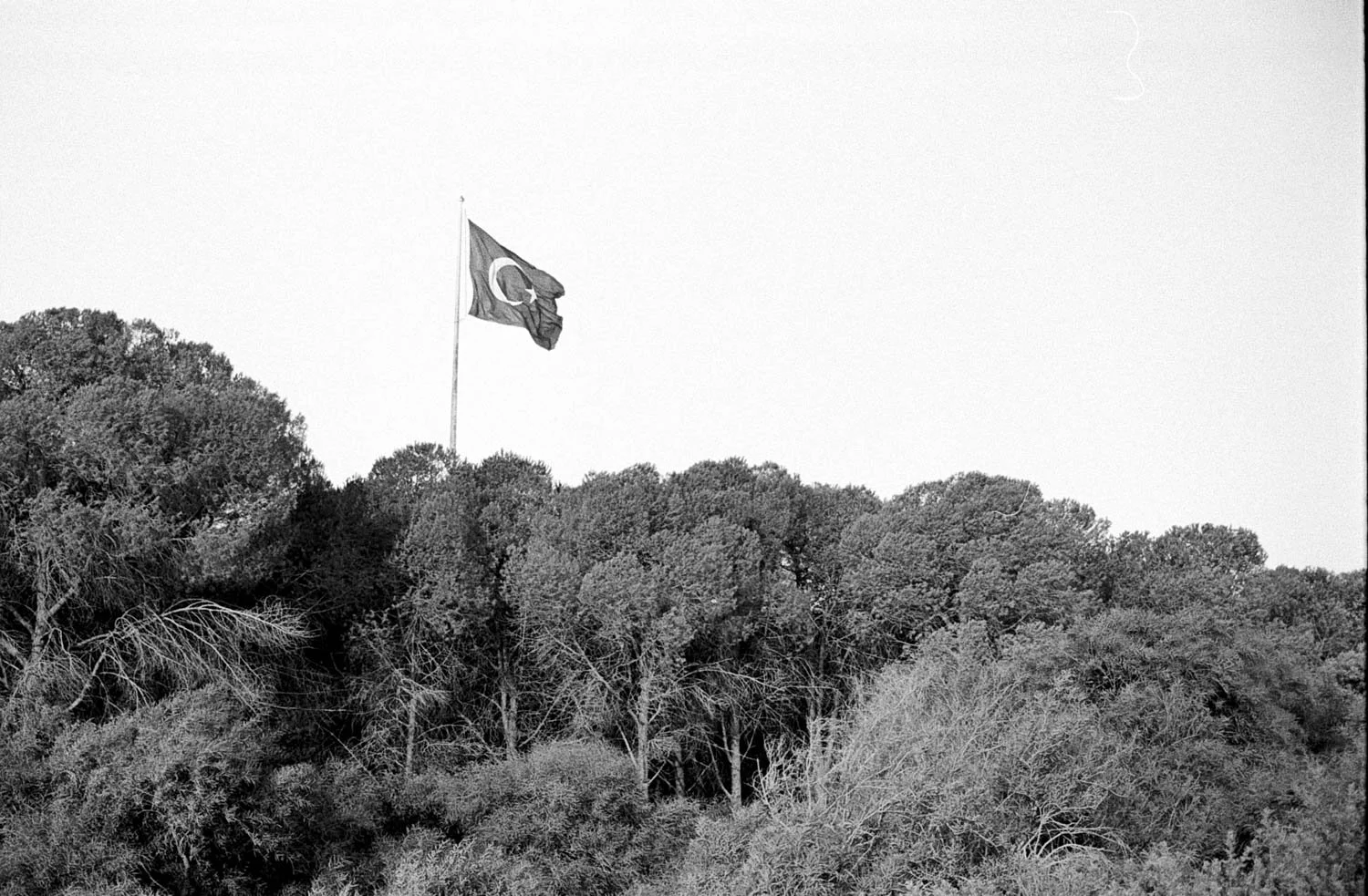
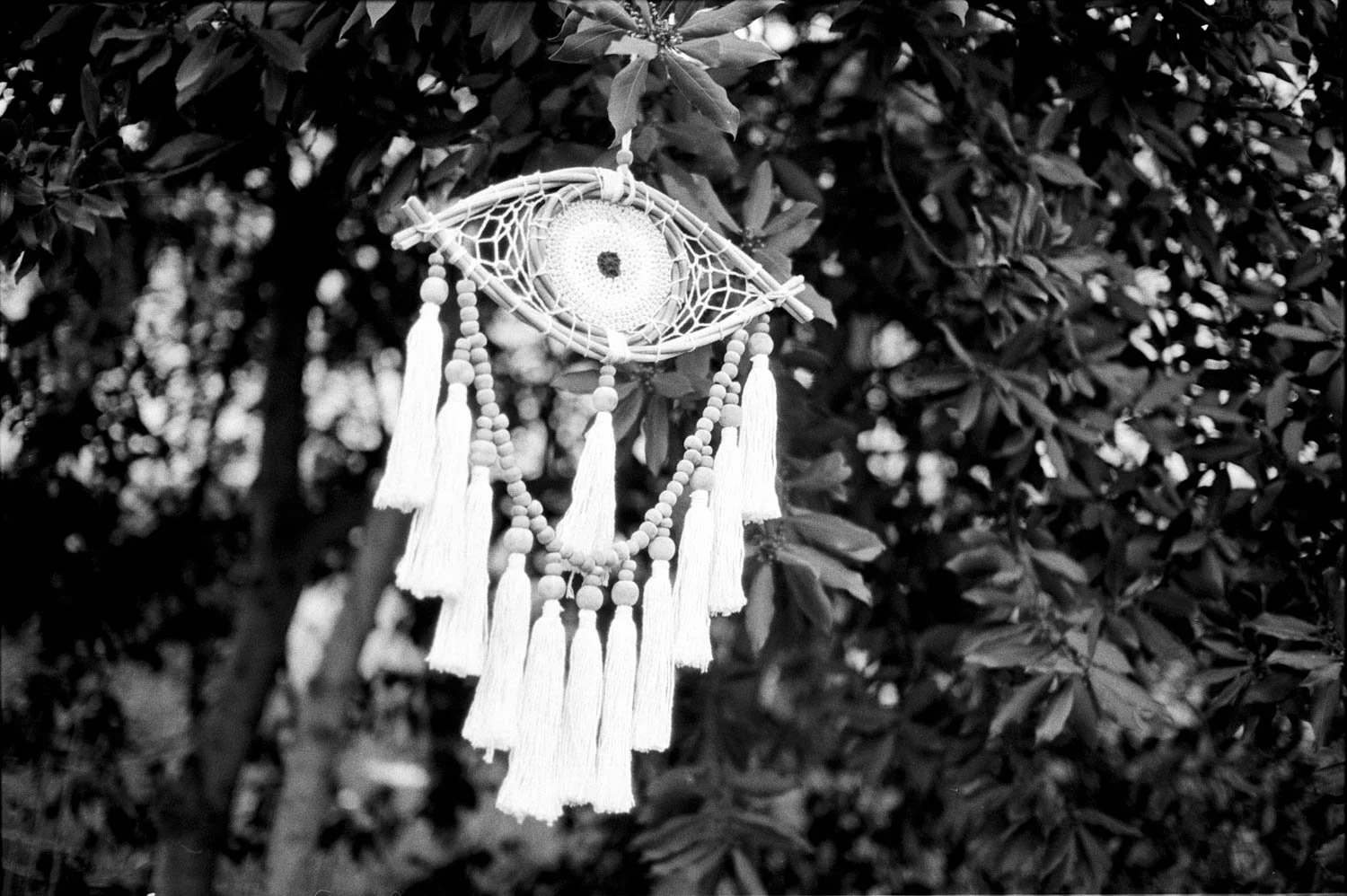
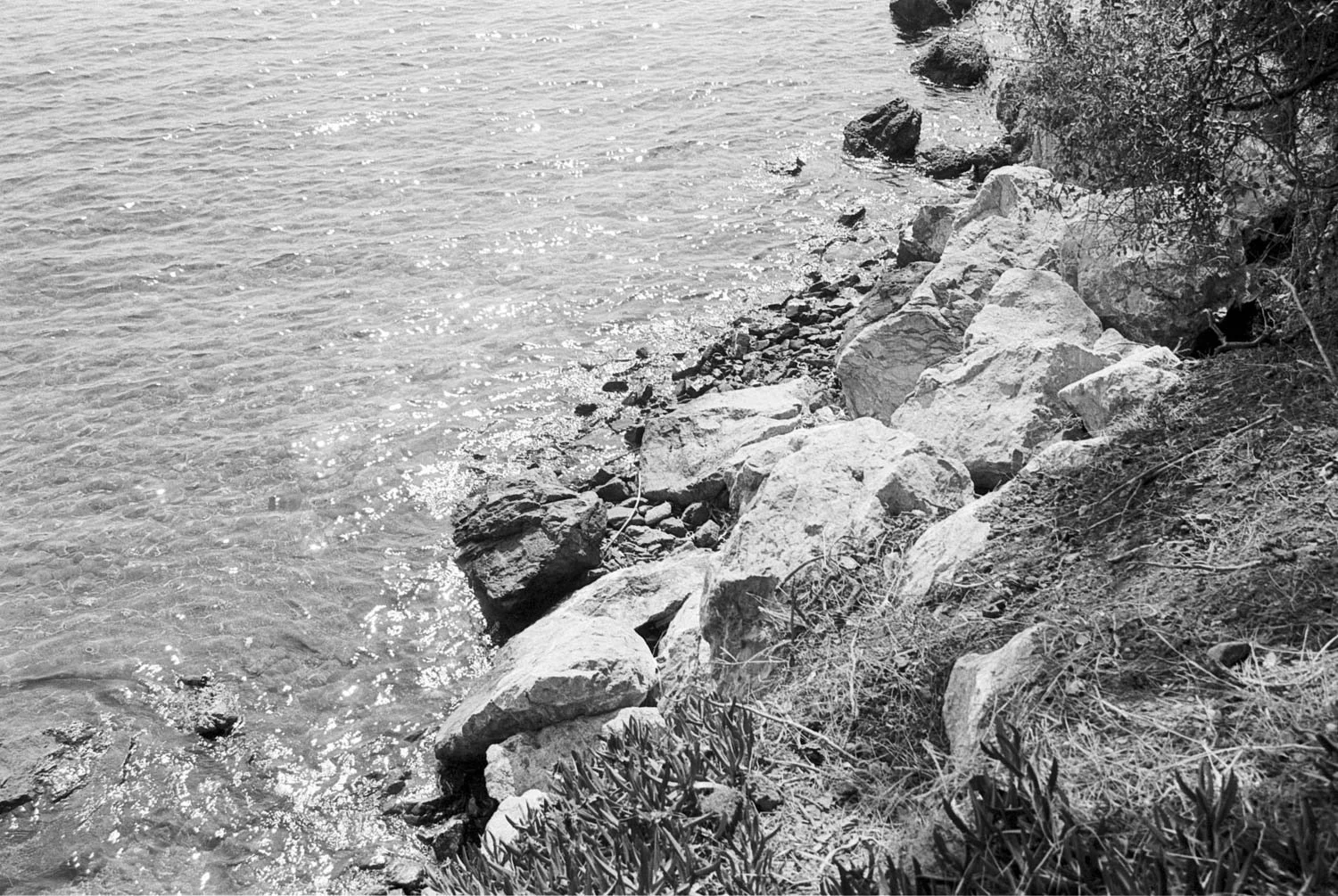
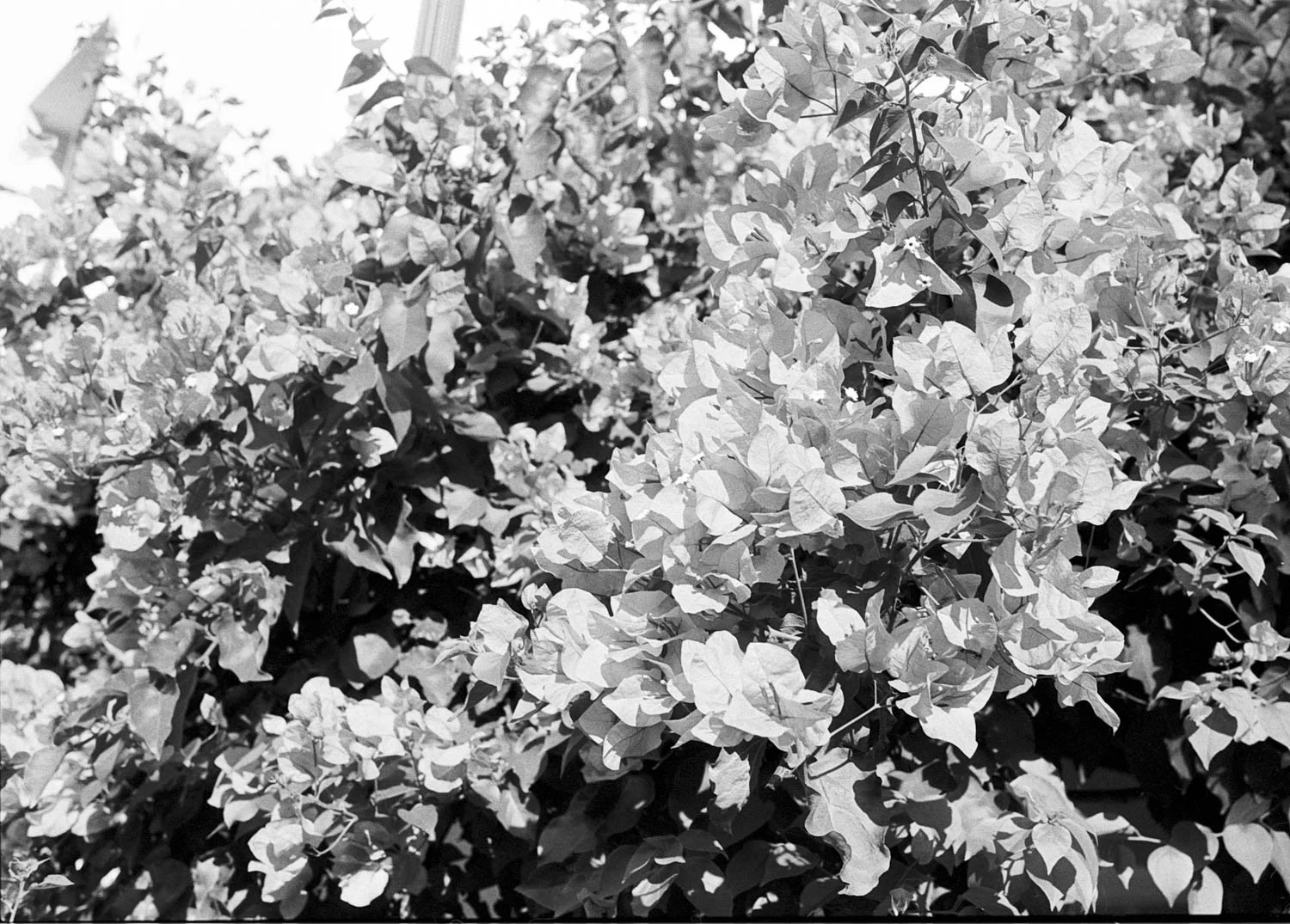
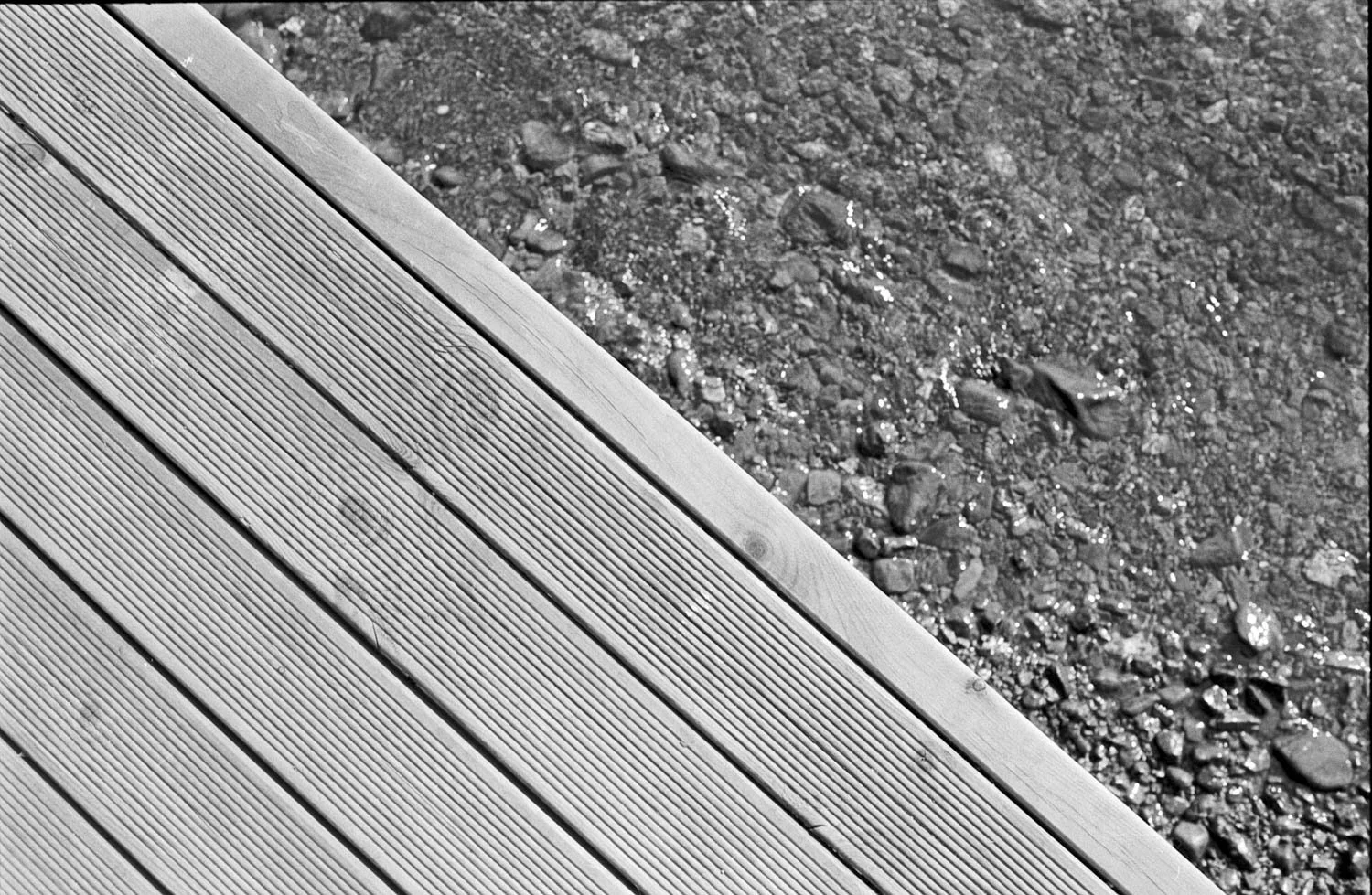
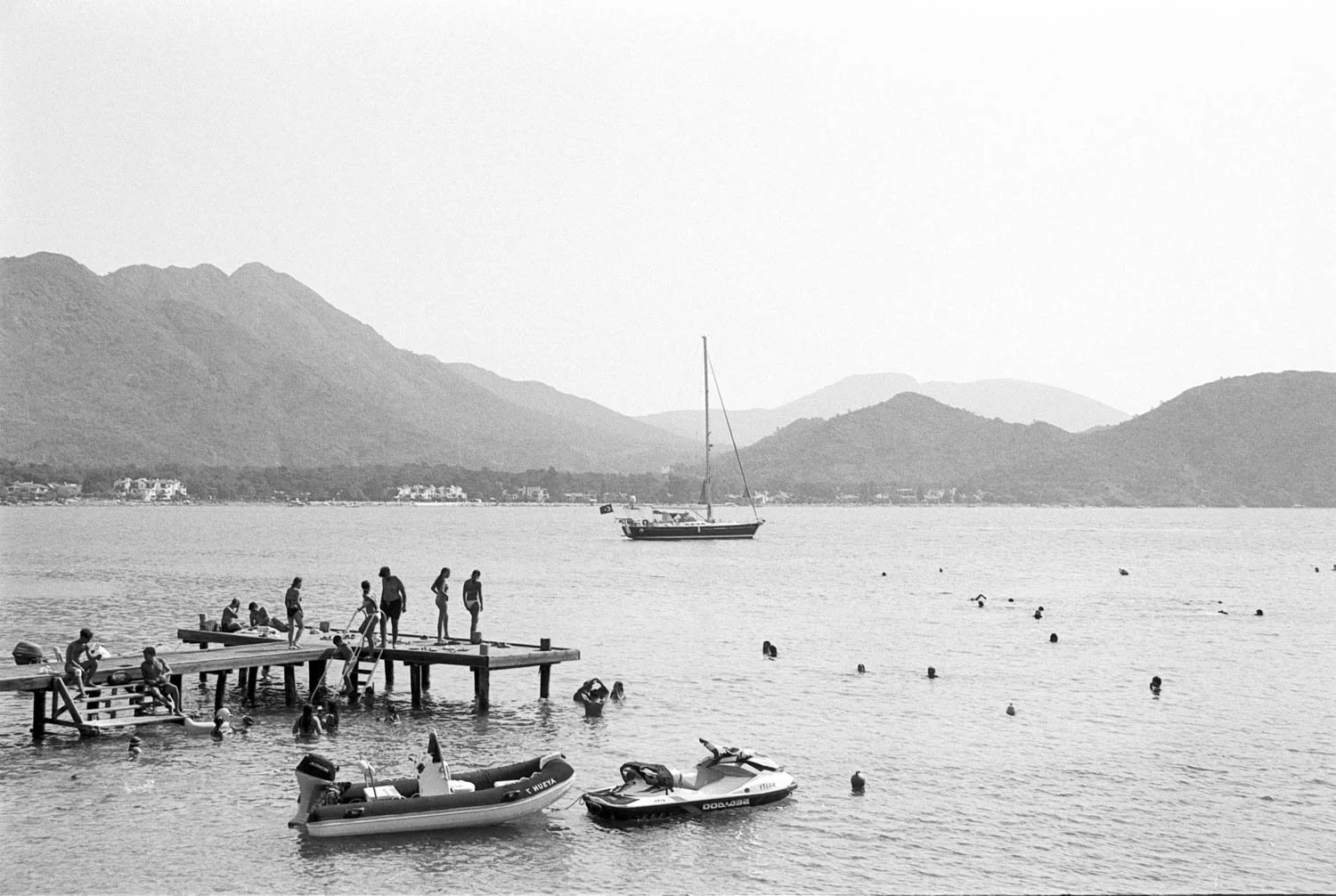
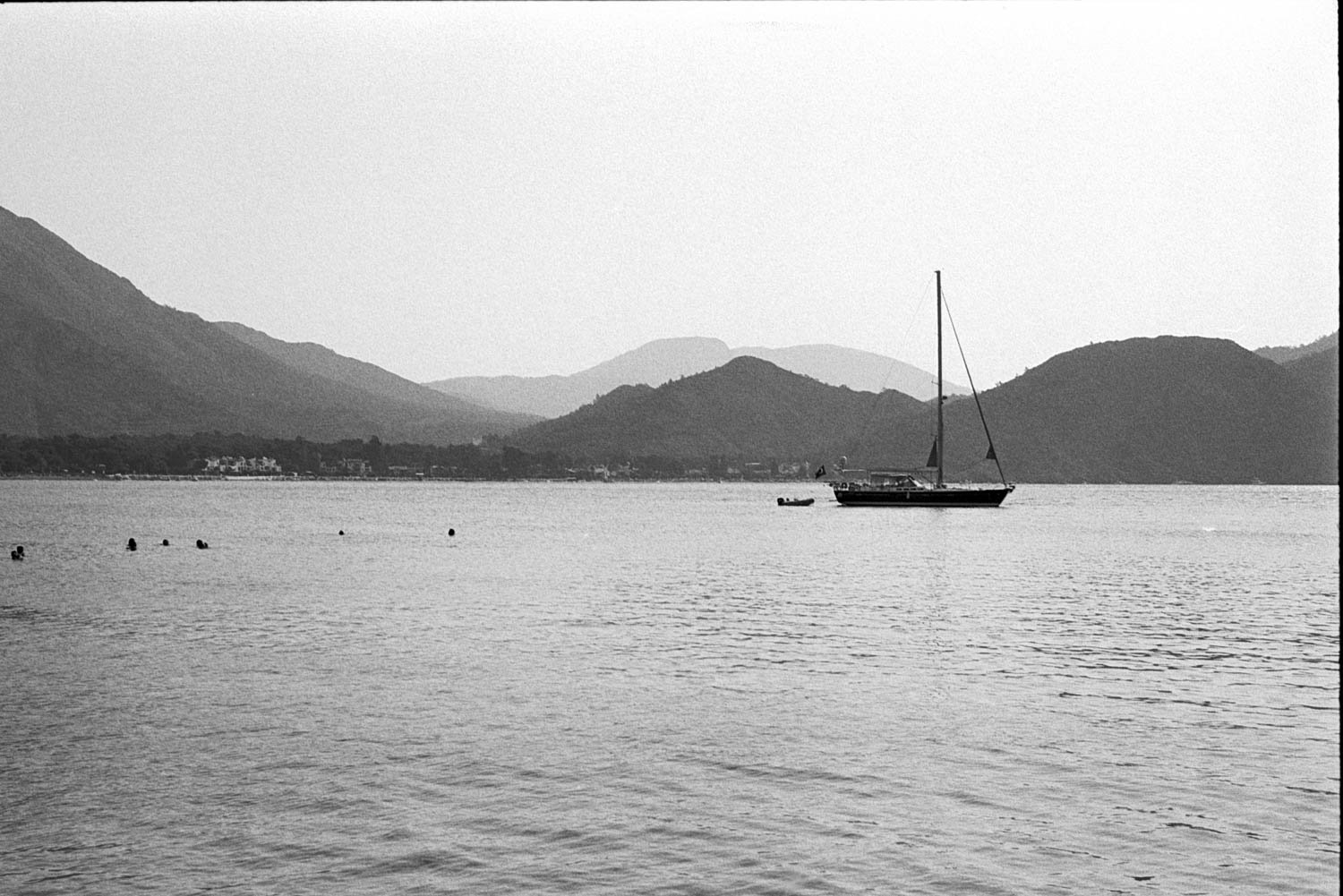
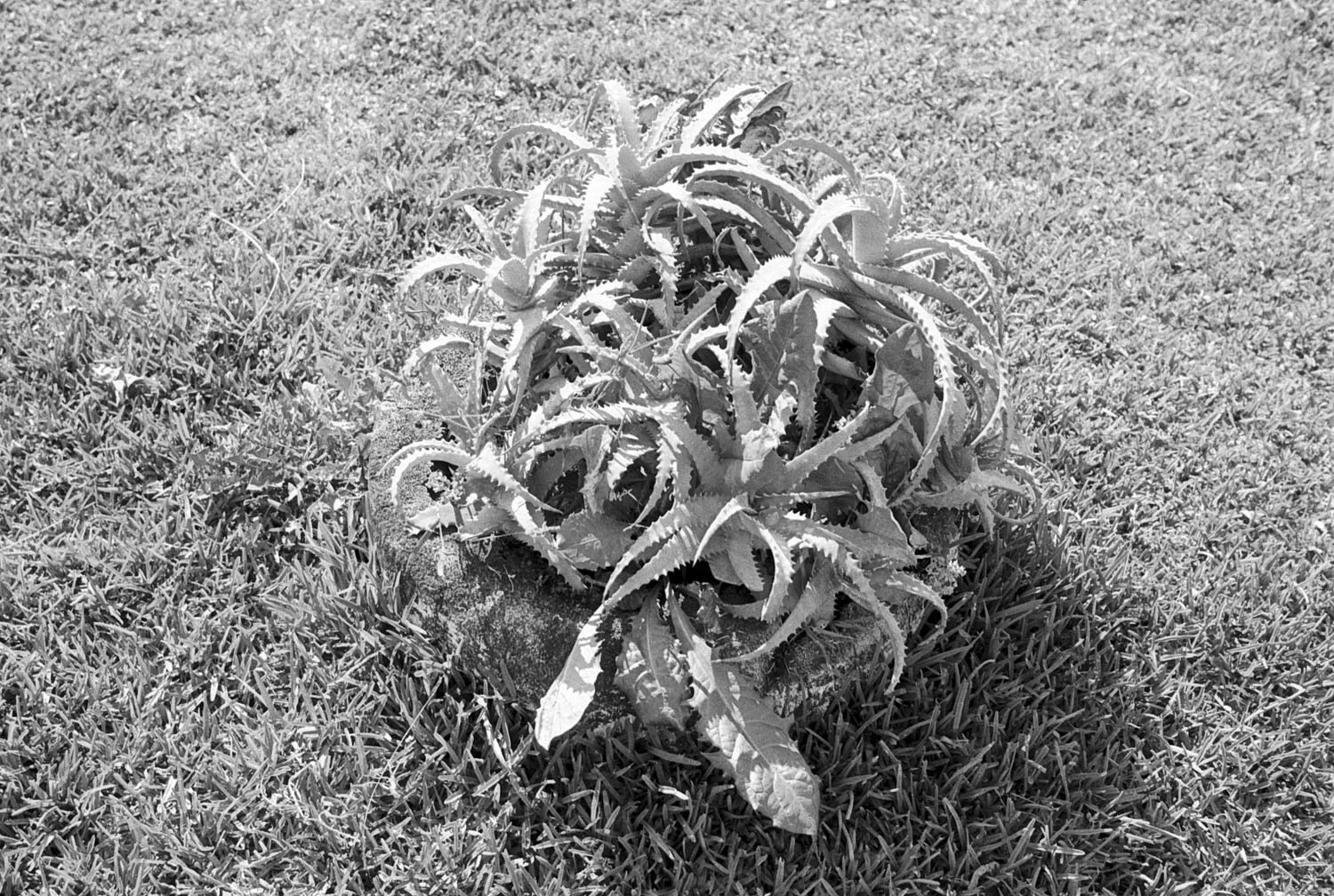
Shooting Ilford Ortho 80 here becomes a study in contrast—not only of light and shadow, but of time. The heat forces the film to respond with a kind of fragile precision. Every frame becomes a meditation: the glimmer of the Aegean, the white-washed houses, the olive trees dancing under the wind of two seas, the ruins of Knidos quietly waiting at the edge of the world. With the FM3A’s mechanical heartbeat, each click feels like a small prayer to the past.
But beyond the philosophy and the photography, Datça is also a place of simple human joy. The sea is impossibly blue—so clear that it feels like transparency has been made into water. Family time stretches differently here. Mornings begin with the smell of fresh bread and thyme honey; afternoons dissolve in the shade, where laughter echoes between cups of cold tea. Children jump into the sea with the same excitement as the dolphins that sometimes cross the bay. Evenings are slow, almost sacred—shared dinners under the stars, conversations drifting like warm wind through the ancient streets.
There is no rush in Datça. No need to prove anything. You exist—under the sun, in the sea, with the people you love. And in that existence, something shifts quietly inside you. You feel connected to the hundreds of generations that came before, to the stones beneath your feet, to the clear light that has illuminated this peninsula for thousands of years.
Travelling to Datça in 2025 is not just a holiday; it is a return to essence. A reminder that life can be simple yet profound. A camera can be more than just a tool—it can be a bridge between worlds. That family time is perhaps the purest philosophy of all. And that in the right place, under the right sun, we find not only beautiful photographs, but a renewed sense of who we are.
Nikon FM3A- Ilford Otho Plus 80
You can visit my Etsy shop for handmade, exotic-wood soft-shutter buttons. Anmhi Crafts